
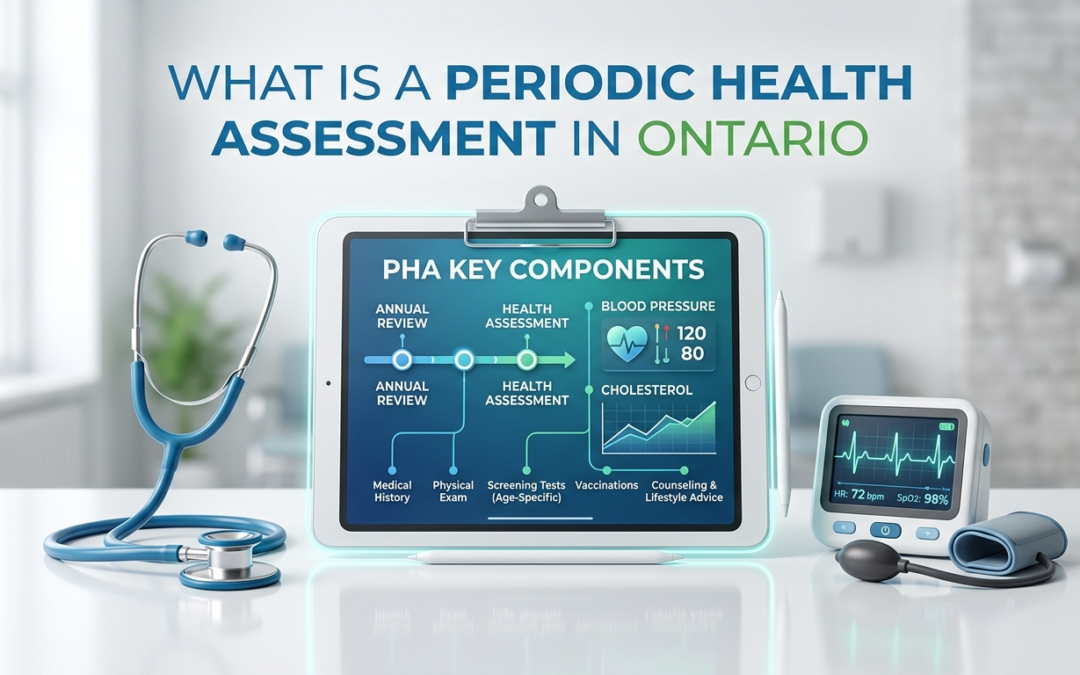
Most people visit a doctor only when they feel unwell. Preventive healthcare takes a different approach. A periodic health assessment helps identify health risks before symptoms appear and supports better long-term wellness. Unlike a one-size-fits-all checkup, this assessment reflects your age, medical needs, and personal risk factors. Understanding how a routine health assessment works can help you make informed healthcare decisions. In Ontario, family physicians use evidence-based recommendations to guide screening, counselling, and ongoing care. This article explains what to expect, why it matters, and how it supports healthier living.
What Is a Periodic Health Assessment?
A periodic health assessment is a planned physical or virtual visit with a family physician that focuses on prevention rather than illness. Instead of treating a specific concern, the appointment reviews your current health and identifies opportunities to reduce future risks.
During the visit, your doctor reviews your medical history, updates your family medical history, and discusses your overall health evaluation. The conversation often includes your daily habits, existing conditions, medications, and personal concerns. A lifestyle assessment also helps identify factors that may affect your future health.
A comprehensive health assessment does not follow the same checklist for every patient. Your physician tailors recommendations according to your age, health status, and individual risk assessment. This personalized approach follows modern Canadian preventive care guidance rather than relying on routine testing for everyone.
For many adults, the visit also serves as a preventive health assessment that supports early detection of disease and encourages healthier lifestyle choices. It creates an opportunity to ask questions, discuss concerns, and build a long-term healthcare plan.
Why It Matters
Preventive healthcare works best before problems become serious. Many common conditions develop quietly and may not cause noticeable symptoms during the early stages.
A routine health assessment helps identify concerns through appropriate blood pressure screening, diabetes screening, cholesterol screening, and other evidence-based evaluations when clinically indicated. Early identification often allows patients to make lifestyle changes or begin treatment before complications develop.
Your doctor also reviews whether you need laboratory tests, a vaccination review, or recommended immunizations based on your age and health status. These discussions support informed healthcare decisions while avoiding unnecessary testing.
Another important benefit involves patient education. Understanding your personal health risks allows you to make practical changes that support a healthy lifestyle. Small improvements in nutrition, physical activity, sleep, and stress management often produce meaningful long-term benefits.
Preventive visits also strengthen continuity of care. Seeing the same physician over time creates a more complete understanding of your health history. This relationship helps doctors recognize changes earlier and provide more consistent guidance throughout different stages of life.
Periodic Health Assessment vs. Annual Physical
Many people believe these terms describe the same appointment. Modern healthcare guidelines make an important distinction.
A periodic assessment focuses on your individual health needs rather than following a standard yearly checklist. Your physician recommends preventive services according to your medical history, age, family history, and current risk factors.
An annual health assessment in Ontario often refers to the traditional yearly physical that many patients remember. Today, healthy adults may not require a comprehensive physical examination every year. Instead, physicians recommend assessments when they provide meaningful clinical value.
A preventive medical checkup emphasizes evidence-based screening and counselling rather than performing every available test. This approach reduces unnecessary investigations while ensuring appropriate preventive care.
Your physician may recommend a health screening in Ontario based on provincial screening guidelines and your personal risk profile. The goal remains early detection, not routine testing without a clear medical reason.
What Happens During the Visit?
Every appointment differs slightly because every patient has unique healthcare needs. Most visits begin with a discussion about your overall health and any changes since your previous appointment.
Your physician reviews current medications, performs medication management when appropriate, and asks about symptoms, lifestyle habits, and existing medical conditions. The visit may include a physical examination if it helps answer a clinical question or supports preventive care.
Depending on your age and risk factors, your doctor may recommend cancer screening, additional laboratory tests, or ongoing monitoring for chronic disease management. Some patients may also receive a referral to specialist services if further assessment becomes necessary.
A family doctor health assessment also provides an opportunity to review your goals, answer questions, and plan future follow-up care. Together, you can decide which preventive services are most appropriate and when they should occur.
This patient-centered approach reflects current evidence and supports informed decisions rather than unnecessary interventions.

Who Should Consider it?
A routine health assessment benefits many adults, even when they feel healthy. Your doctor recommends the timing based on your age, medical history, and overall health goals.
An adult health assessment may benefit people who:
- Have a family history of chronic illness.
- Want to reduce future health risks.
- Need regular monitoring for existing conditions.
- Take long-term medications.
- Want guidance on healthy aging.
- Have not seen a doctor for several years.
A primary care health assessment also helps people who are experiencing changes in their health, even if those changes seem minor. Your physician can decide whether further evaluation or ongoing monitoring is appropriate.
What Screenings May Be Included?
Every assessment is different because healthcare decisions should reflect individual needs rather than a fixed checklist.
Your physician may recommend a health assessment in Ontario that includes age and risk appropriate screening. These recommendations often follow provincial and national preventive care guidelines.
Depending on your health profile, the visit may include:
- Blood pressure measurement
- Diabetes screening
- Cholesterol assessment
- Cancer screening recommendations
- Medication review
- Lifestyle counselling
- Mental health discussion
- Vaccination updates
Your doctor may also discuss whether additional investigations or referrals would benefit your long-term health.
How Often Should You Have One?
There is no single schedule for everyone.
A periodic health assessment should occur according to your individual health needs instead of following a yearly routine for every patient. Younger adults with few risk factors may require fewer visits, while older adults or people with chronic conditions often benefit from more regular reviews.
Your physician considers your age, existing medical conditions, family history, medications, and lifestyle before recommending the next routine health assessment.
This personalized approach supports personalized preventive care and helps patients receive appropriate services without unnecessary testing.
Supporting Preventive Healthcare Across the Greater Toronto Area
Preventive healthcare works best when you have an ongoing relationship with a trusted healthcare provider. Regular virtual visits help physicians monitor changes over time and provide consistent guidance throughout every stage of life.
If you are looking for preventive healthcare, establishing care with a family physician supports better long-term health outcomes. It also makes future appointments more efficient because your physician already understands your medical history and personal health goals.
Patients searching for a periodic health assessment in Toronto often want a clinic that values prevention, education, and continuity of care. People living in North York, Toronto, Scarborough, Markham, Vaughan, and Richmond Hill can benefit from having a dedicated family doctor in Toronto who understands their ongoing healthcare needs.
Compass Medical provides comprehensive family medicine with a strong focus on prevention, patient education, and evidence-based care. Whether you need a preventive care appointment or guidance about recommended screenings, the clinic helps patients make informed healthcare decisions that support long-term wellness.
If you are looking for periodic health assessment in Toronto, visit the Compass Medical Clinic website to schedule your appointment today.
Overview
A periodic health checkup is more than a routine visit. It creates an opportunity to understand your current health, identify future risks, and make informed decisions with your physician.
Rather than relying on unnecessary yearly testing, today’s preventive approach focuses on evidence, individual risk factors, and shared decision-making. A well-planned routine health assessment helps detect health concerns earlier, supports healthier lifestyle choices, and builds a stronger partnership between patients and their healthcare team.
Frequently Asked Questions
Is a periodic health assessment the same as an annual physical?
No. It is personalized and focuses on evidence-based prevention. An annual physical traditionally follows a standard yearly examination.
How often should I have a periodic health checkup?
There is no universal schedule. Your physician recommends the timing based on your age, medical history, existing conditions, and personal risk factors.
What should I bring to my appointment?
Bring your health card, medication list, recent test results, and any questions about your health. Sharing updates about your family history also helps your physician.
What conditions can a periodic assessment help detect?
The visit may identify risk factors for high blood pressure, diabetes, high cholesterol, certain cancers, and other chronic conditions before symptoms develop.
Can I discuss more than preventive screening during the appointment?
Yes. You can also discuss medications, lifestyle concerns, ongoing symptoms, mental wellbeing, and whether additional testing or specialist care may be appropriate.